
A Solar panel is a device that changes sunlight into electricity. It uses solar cells to capture the sun’s energy. This clean energy can power homes, offices, and other buildings. A solar panel is one of the best ways to produce renewable electricity.
A Solar panel is becoming a popular choice around the world. Many people want to save money on electricity bills. Others want to protect the environment. As energy prices continue to rise, more families and businesses are choosing solar panels for a better future.
A Solar panel offers many benefits. It helps reduce pollution and lowers energy costs over time. It also needs very little maintenance and lasts for many years. In this article, you will learn how a solar panel works, its benefits, and why it is a smart investment.
Lower Electricity Bills
One of the biggest benefits of a solar panel is lower electricity bills. It uses free energy from the sun to produce electricity. This means you buy less power from the electric company. As a result, your monthly energy costs become lower.
A solar panel can help you save money for many years. The savings increase as electricity prices go up. Homes and businesses with solar panels often spend less on energy. This makes a solar panel a smart and cost-effective over.
Low Maintenance
A solar panel needs very little maintenance after installation. It has no moving parts, so there is less chance of damage. Cleaning the panels a few times a year is usually enough. This helps them work efficiently and produce more electricity.
Most solar panels are built to last for 25 years or more. They can handle different weather conditions with proper care. Regular inspections can help keep the system in good condition. This makes a solar panel a reliable and hassle-free energy solution.
Renewable Energy Source
A solar panel uses sunlight to produce electricity. Sunlight is a renewable energy source because it is naturally available every day. It does not run out like coal, oil, or natural gas. This makes solar energy a reliable choice for the future.
Using a solar panel helps reduce the need for non-renewable fuels. It supports clean and sustainable energy production. People can enjoy electricity while helping to protect natural resources. Choosing solar energy is a smart step toward a cleaner and greener world.
Low Lifespan
Some solar panels may have a shorter lifespan due to poor quality materials, harsh weather, or lack of maintenance. Damaged parts can reduce their performance over time. Regular care and proper installation can help increase the working life of a solar panel.
A low lifespan means the solar system may need replacement sooner. This can increase the overall cost for users. Choosing high-quality solar panels and maintaining them properly can help avoid early damage.
| Reason for Low Lifespan | Effect |
| Poor quality materials | Faster damage and lower performance |
| Extreme weather conditions | Can affect panel efficiency |
| Lack of maintenance | May reduce energy production |
High Energy Efficiency

A solar panel provides high energy efficiency by converting sunlight into usable electricity. It can produce clean power without wasting natural resources. Modern solar panels are designed to capture more sunlight and generate better energy output.
High energy efficiency helps reduce electricity costs and saves energy for daily use. A solar panel can provide reliable power for homes and businesses. With advanced technology, solar panels are becoming more efficient and useful for a sustainable future.
Read out this Article;Top 10 Festival Celebrations Around the World Guide
Reduced Energy Loss
A solar panel helps reduce energy loss by producing electricity close to where it is used. This reduces the need for long-distance power transmission. Less energy is wasted during the delivery process, making the system more efficient.
Using a solar panel allows better use of available sunlight. It converts solar energy directly into electricity with fewer losses. This helps save energy and provides a more reliable power source for homes and businesses.
Durable Design
A solar panel is built with strong and durable materials. It can withstand rain, wind, heat, and other weather conditions. The protective glass and sturdy frame help keep the panel safe from damage. This makes it suitable for long-term outdoor use.
The durable design of a solar panel helps it perform well for many years. It requires very few repairs when properly installed and maintained. A strong design also improves reliability and protects your investment. This makes solar panels a dependable choice for homes and businesses.
Maximum Power Output

Maximum power output is the highest amount of power a machine or device can produce. It shows how strong and efficient the system is during its best performance. A higher power output helps the machine complete work faster and handle heavy tasks more easily.
Maximum power output depends on factors such as the design, fuel or energy source, and operating conditions. Regular maintenance and proper use help the machine reach its maximum performance safely. Knowing the maximum power output is important for selecting the right equipment for different applications.
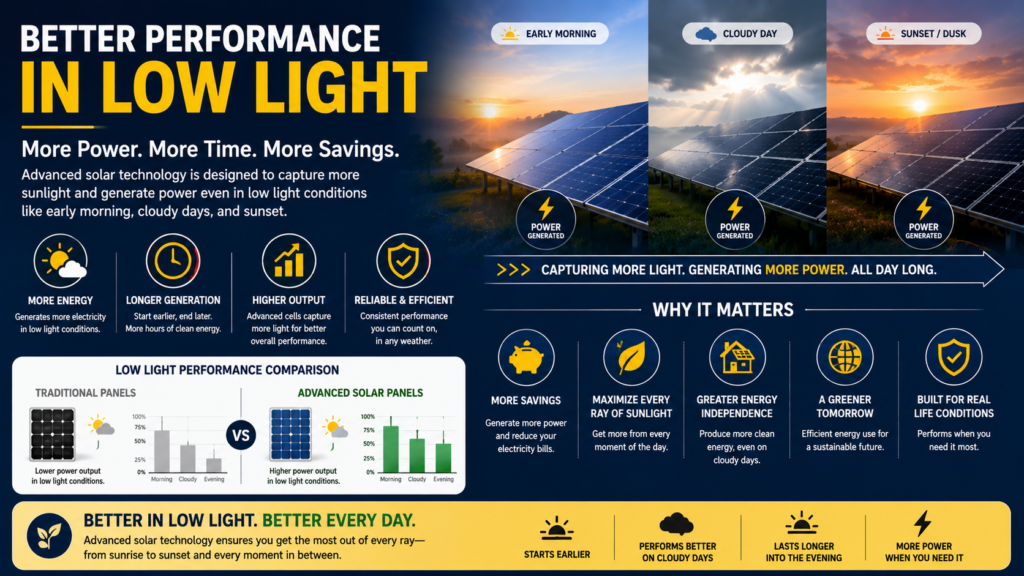
Better Performance in Low Light
Better performance in low light means a device can work well even when there is very little light. It can capture clearer images and show more details in dark places. This helps users get better results at night or in dim indoor areas. It also reduces blur and unwanted noise.
Many modern devices use advanced technology to improve low-light performance. Good sensors and image processing make pictures brighter and sharper. This feature is useful for photography, security, and monitoring in different environments.
Benefits of Better Performance in Low Light:
- Produces clearer images in dark conditions.
- Captures more details with less noise.
- Improves visibility during night use.
- Works well in indoor and outdoor low-light areas.
- Provides more reliable and accurate results.
FAQs
1. What is a Solar Panel?
A solar panel is a device that converts sunlight into electricity using solar cells. It provides clean and renewable energy.
2. How long does a Solar Panel last?
A solar panel usually lasts 25–30 years with proper installation and regular maintenance. Many continue to produce electricity even after that.
3. Does a Solar Panel work on cloudy days?
Yes, a solar panel can still generate electricity on cloudy days. However, it produces less power than it does in direct sunlight.
4. How do I maintain a Solar Panel?
Keep the solar panel clean and free from dust, leaves, and debris. Regular inspections also help maintain good performance.
5. Is a Solar Panel worth the investment?
Yes, a solar panel can reduce electricity bills and provide long-term savings. It is also an environmentally friendly energy solution.
Conclusion
A Solar Panel is a smart and eco-friendly way to produce electricity from sunlight. It helps reduce electricity costs and supports clean energy. It is suitable for homes, businesses, and many other applications. With proper installation, it can provide reliable power for many years.
Choosing the right Solar Panel depends on your energy needs and budget. Regular cleaning and maintenance help improve its performance and lifespan. Investing in a solar panel is a good step toward saving money and protecting the environment for the future.